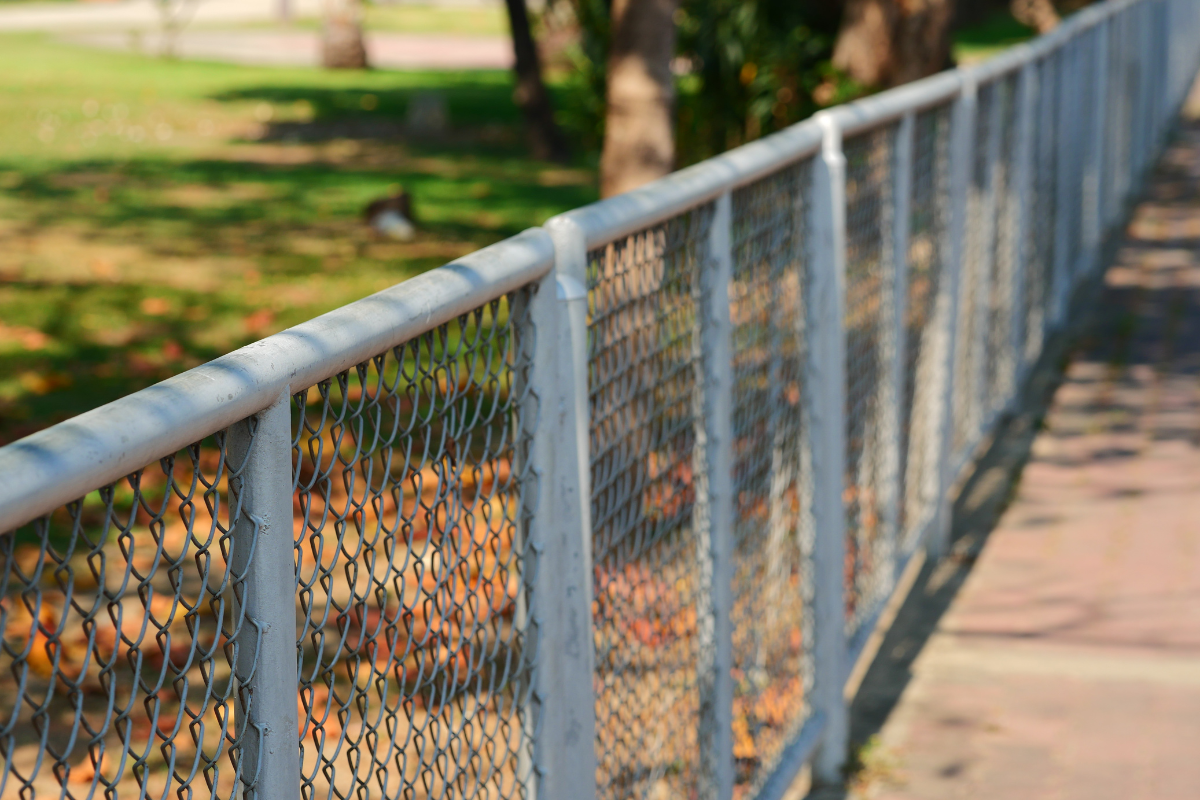
Chain link has a reputation for being utilitarian, the fence you install when you need performance more than style. That stereotype made sense when choices were limited to bare galvanized fabric and a few stock heights. The market has moved. An innovative chain link fence company treats the material as a system with endless variables: wire gauge and mesh size, coatings and colors, framework alloys, privacy attachments, tensioning hardware, and layout geometry. When you combine those pieces with careful planning and skilled labor, you can deliver security and curb appeal at a price point that still beats most ornamental systems.
I have spent two decades specifying, building, and troubleshooting chain link fencing in residential yards, municipal parks, substations, water treatment plants, school campuses, distribution yards, and sports facilities. The material is forgiving, but the difference between a basic cage and a refined perimeter can be night and day. The core of innovation is not a new gimmick, it is making smart choices about design and execution, project by project.
Rethinking the Aesthetic: Form Follows Function, Then Circles Back
Ask most homeowners about chain link and they picture a dull silver grid. The moment you bring out a black vinyl-coated sample, the conversation changes. Color absorbs light, reduces glare, and lets the fence recede behind landscaping. A matte black framework with black fabric blends into shadow lines and tree trunks. In tight urban lots, a deep green pairs well with ivy and hedges. For coastal homes, a sand or bronze tone can echo stucco and stone.
Privacy slats are still common, but if you install them loosely they rattle in wind and warp under sun. We have moved toward two alternatives when clients want screening. One is a tightly woven privacy fabric panel with reinforced hems and grommets, tensioned with lacing cord so it stays taut and quiet. The other is a composite infill that clips in line with the wire diamonds, which adds stiffness without a billboard effect. Either option can be specified to a wind load rating, which matters in gust-prone corridors.
Beyond color and screening, proportion drives visual quality. Many chain link fences look spindly because the framework is undersized. Upgrading line posts one nominal size, or stepping wall thickness from 0.065 inches to 0.095 or Schedule 40 pipe, yields cleaner sightlines and reduces deflection when the neighbor’s kid leans a bike against it. A well-proportioned frame takes paint evenly, carries gates without sag, and reads as intentional rather than temporary.
Performance Starts with Material Choices
Chain link fencing lives outdoors 24 hours a day. Sun, salt, fertilizers, pet urine, sprinkler overspray, and winter de-icing salts all play their part. An experienced chain link fence contractor starts with environment and service life expectations.
Galvanized after weaving fabric remains the workhorse for inland sites. The zinc coating protects cut ends and remains cost-effective for long runs. For coastal zones, I have learned the hard way that thinner pre-galvanized salt-mist exposure eats connector hardware first, then the wire. Moving to an aluminized coating on the wire fabric, or a fusion-bonded vinyl over galvanized wire, slows that path. The framework should match or exceed the fabric. If the budget allows, Schedule 40 galvanized pipe outperforms light-gauge tubing, especially for gates.
Mesh size and wire gauge shape both performance and look. A 2-inch diamond is standard for residential and light commercial use. Drop to a 1-inch diamond for high-security or small-pet containment. Going from an 11.5 gauge wire to 9 gauge adds stiffness that you can feel when you try to climb it, which is exactly the point in certain settings. On tennis courts and ballfields, we often specify 9 gauge with a knuckle-and-twist selvage combination to reduce snagging while keeping strength at the top.
Posts and footings are the skeleton. In clay soils that heave, a simple 8-inch by 24-inch footing might twist a line of posts every spring. A bell-shaped footing with a widened base resists uplift. In sandy soils, depth is your friend. In freeze zones, footings must go below frost line, and I prefer to sleeve posts with a bituminous coating or use a poly sleeve at grade to separate metal from soil salts.
Modern Hardware and Gate Systems That Do More Than Swing
Hardware has quietly improved over the last decade. Tension bands and brace bands in pressed steel have cleaner galvanizing and tighter tolerances than many stamped imports from the 1990s. Self-closing hinges are now adjustable and field-serviceable. Panic bar hardware designed for chain link gates allows code-compliant egress without mangling a gate frame to make something fit. For pool enclosures, magnetic self-latching mechanisms spare the headaches of spring fatigue.
Gates deserve their own attention. A well-built gate equals the rest of the fence in cost and can exceed it in field time. Cantilever slide gates excel where swing clearances are tight. Modern aluminum frames with internal steel reinforcement carry 20-foot openings smoothly if you size the rollers and posts correctly. Add a brushless DC operator with soft start and stop, and the gate stays quiet enough for residential lots. On the other hand, a simple single swing gate with a welded frame and diagonal brace outperforms a rectangular, unbraced frame every time. If you are tired of gates that drop after two winters, ask the chain link fence company for heavier hinges with grease fittings and specify field-welded tabs instead of bolt-on hinges for wide leaves.
Access control is more affordable now. A keypad and photo-eye kit for a small commercial gate lands under a few thousand dollars installed, assuming power is nearby. Where power is not available, solar kits can be reliable if you use a properly sized battery and mount panels clear of tree shade. Plan the conduit route during the layout phase rather than trenching around a finished fence.
The Craft of Layout: Straight Lines, Clean Transitions, and Smart Heights
Innovative design is not only about materials. It begins with a tape measure and a line level. The worst offense I see is the stair-step top line that follows erratic grade changes. The second worst is a wall of metal where a more nuanced approach would have softened the view.
Strong layout looks effortless because the installer made choices. Along rolling ground, a raked panel that keeps the top rail parallel to grade maintains a clean line without gaps under the fabric. In steeper sections near patios or walkouts, a stepped layout with properly cut and sleeved fabric prevents awkward triangular holes. The choice depends on slope and use. Pets and sports areas favor raked lines, while terraces and retaining walls often work better stepped.
Corners and turns are telling. An inexperienced crew will try to pull the fabric around a corner, which distorts the diamonds and weakens the stretch. We set corners as true pull points with braces, cut the fabric, and re-tension each run. Where a fence meets masonry, we avoid the lazy strap-and-screw approach. A galvanized or stainless core drill and a set anchor or face plate with expansion anchors gives a better long-term connection, especially when the wall carries wind load from privacy infill.
Height carries meaning. A four-foot fence keeps toddlers in a yard and offers a boundary. Five feet begins to control small to medium dogs. Six feet deters casual entry for most residential applications. Above seven feet, you are signaling security and code compliance shifts, especially if you add barbed wire or outriggers. For sports, backstop panels might rise to 20 or 30 feet with catenary cables. These tall runs need engineered drawings, not guesswork.
Chain Link Fencing Services That Respond to Context
A modern chain link fence contractor offers more than installation. Design consults, permitting support, material sourcing, and maintenance programs all contribute to outcomes that last.
Permitting often directs design. Pool codes require self-closing, self-latching gates that open outward, minimum height, and maximum clearances at grade. Some municipalities limit chain link in front yards or require color-coated fabric. In wildland-urban interface zones, combustible attachments such as certain slat materials may be restricted. An experienced chain link fence company will have templates ready and can shorten approval cycles by providing cut sheets and spec pages that match the proposed materials.
Sports facilities are their own world. Baseball outfields with top rails benefit from safety caps, even in chain link, to reduce impact injuries. Tennis court fences need windscreen and door hardware that resists slamming. Pickleball lines call for tighter mesh to control ball ricochet. I have learned to overbuild gate posts at court entries, because the traffic of players swinging bags and water jugs tests weak points daily.
Industrial yards and utilities shift the focus to controlled access and durability. Here, we specify heavier frameworks, 9 gauge fabric, and often bottom rails instead of tension wire to prevent push-under attempts. Where forklifts roam, bollards protect gate operators and end posts. On long straight runs, we insert expansion gaps or sleeve connections to allow for thermal movement, so the top rail does not buckle on hot days. Razor wire and outriggers remain tools, but not every site needs them. When a client asks for an aggressive security look near a residential boundary, I suggest instead an 8-foot fence with anti-climb mesh and a clear zone on the inside, which achieves the goal without the optics of prison hardware.
Installation Practices That Separate Pros from Patch Crews
A fence is only as good as the ground it stands in and the hands that stretch it. Chain link fence installation rewards patience and sequence. Set the posts true and in plane. Let concrete cure. Pre-fit the gates and check swing paths before you stretch fabric. Tension from solid anchor points and watch the diamond alignment as you pull. Tie top rail and tension wire evenly, not in a hurry, and use enough ties to prevent bowing between posts. On privacy jobs, confirm wind direction and stretch fabric accordingly to limit slat movement and whistling.
We make two passes on most jobs. The first pass sets structure. The second pass, sometimes days later, is all finish: cut tails, grind burrs, touch-up coat, adjust hinges, verify latches, and test locks. Clients notice this discipline. It is also where we prevent callbacks. A misaligned latch that catches half the time becomes a daily irritation for the owner.
Weather matters. Stretching fabric on a 95-degree afternoon with a dark vinyl coating leads to a softer pull than on a cold morning. If you set line posts at the edge of plumb in heat, they may shift as the concrete cures and the sun moves off the site. We use temporary braces on long runs to maintain geometry until the concrete gains strength.
Repair, Retrofit, and Life Extension
Chain link fence repair splits into two categories: impact damage and time-related wear. Vehicle hits, fallen limbs, or ground heave can crumple a section. The fix is surgical: cut out the damaged fabric, replace bent rails and posts, and weave in a new section so the diamonds match. Experienced crews can make a repair nearly invisible with attention to weave direction and selvage.
Time-related issues come slower. Rust blooms at cut ends and ground lines. Ties fatigue. Gate hinges sag. Privacy slats shrink or slip. The best maintenance plan is periodic: a biennial walk of the perimeter to tighten hardware, touch up coatings, adjust gates, and replace early failures before they cascade. On older galvanized fences that still have good bones, we have success with a clean, prime, and paint program. After degreasing and pressure washing, a zinc-rich primer and a urethane topcoat can add 8 to 12 years of life. The cost lands well below full replacement, and for clients who cannot shut down a site, the work can be phased.
Retrofits allow a fence to adapt to new needs. Security upgrades might add anti-climb panels at specific spots. A dog daycare may switch from 2-inch to 1-inch mesh along the bottom 24 inches. A school may add windscreens in targeted areas to calm gusts on a field. Gate operators can be added to existing slide gates, provided the frame is true and the track is sound. The key is honest assessment. If the framework is out of square and posts are corroded at grade, bolting technology onto a failing structure will not end well.
Sustainability, Budgets, and the Real Math of Value
Sustainability in fence work is practical, not theoretical. Steel and aluminum are recyclable. Many chain link removal projects allow us to reclaim usable framework and donate it to community gardens or animal shelters. When we cannot repurpose, we separate metals for recycling and reduce landfill waste significantly. On the front end, specifying heavier coatings and better hardware means fewer replacements and less material throughput over the fence’s life.
Budget conversations ought to balance first cost with lifecycle cost. A typical residential 6-foot galvanized chain link fence installed might run in the range of 20 to 35 dollars per linear foot, depending on access, footing depth, and regional labor rates. Upgrading to color-coated fabric and framework often adds 4 to 8 dollars per foot. Heavier framework can add another few dollars, and privacy infill can add 10 to 20 dollars per foot depending on type. A business owner who balks at an extra 1,500 dollars on a 200-foot run may change their mind when presented with the maintenance savings over ten years and the improved appearance customers will see every day.
On large commercial jobs, material lead times and price volatility matter. Coated wire, black or green, can have longer lead times during peak season. A good chain link fence contractor will lock pricing with suppliers early and order overage for repairs and add-ons. I have watched projects grind to a halt because someone assumed top rail couplings are interchangeable, only to find mismatched wall thickness and poor fit halfway through an install.
Case Notes: Where Modern Design Made the Difference
A city park retrofit taught us a useful lesson. The old 10-foot baseball backstop used galvanized fabric and rusted bottom tension wire. Players complained about glare during late-day games. We replaced it with black vinyl-coated 9 gauge fabric and powder-coated framework, added a bottom rail for rigidity, and installed a low-gloss shade screen behind home plate. Coaches reported improved visibility, and the city reduced maintenance calls because the bottom rail kept mowers from catching on the fence edge.
At a distribution yard near a coastal highway, salt fog chewed through hardware within five years of original installation by a low bid crew. When the chain link fence company I worked with was called in, we swapped to stainless fasteners, aluminized fabric, and Schedule 40 posts. We increased gate post diameters and added neoprene isolators at hardware connections to reduce galvanic action. Eight years later, the fence still looks new, and the client has not had a single gate failure from corrosion.
On a dense residential block, a homeowner wanted privacy without a fortress vibe. We installed a 5-foot black chain link with a cedar batten screen installed on the inside at alternating widths, spaced slightly to allow airflow. The cedar sits on steel stand-offs attached to the top rail and line posts, keeping wood off the ground and out of constant wet. The hybrid reads like a garden feature, not a barricade, and can be removed section by section if needed.
Choosing the Right Partner
Selecting a chain link fence company is as much about process as price. Ask about site evaluation methods. Do they probe for utilities and confirm setbacks? Look at their welds and gate hang techniques on past projects. Request references from projects three to five years old, not just last month’s work. A strong chain link fencing services provider will speak comfortably about load, soil, coatings, and code. They will offer drawings or at least detailed scope notes so you know exactly what is being installed.
If a bid reads like a single line item, you may be paying for change orders later. A good proposal lists fabric gauge and coating, framework size and wall thickness, footing dimensions, hardware types, gate leaf sizes, latch and hinge models, and any accessories like privacy infill or windscreens. It should also outline chain link fence repair terms, warranty coverage, and response times for service calls. A chain link fence contractor who commits to a maintenance walk in the first year signals they stand behind their work.
Where Innovation Heads Next
Innovation in this space continues to focus on smarter coatings, modular accessories, and better integration with access control. Expect to see more composite privacy options that clip into fabric with tool-less installs, improved anti-cut meshes for sensitive sites, and solar operators that thrive in low-light regions thanks to higher-efficiency panels and batteries. On the sustainability front, recycled-content coated wire is gaining ground. The practical future looks like broader aesthetic palettes, quieter gates, and longer intervals between major repairs.
Chain link will always serve as a https://www.google.com/maps/place/Southern+Prestige/@30.3158925,-92.0739959,17z/data=!3m1!4b1!4m6!3m5!1s0x2cec32bd800e8f35:0x1f19c5dbffeebca0!8m2!3d30.3158925!4d-92.0739959!16s%2Fg%2F11sxwjtzzy?entry=ttu&g_ep=EgoyMDI1MDgyNC4wIKXMDSoASAFQAw%3D%3D backbone material. Its strength lies in adaptability and value. With thoughtful design, disciplined installation, and a maintenance mindset, it can carry a modern look that neighbors accept and clients appreciate. When you hire a chain link fence company that treats each job as a system rather than a product, you get more than a boundary. You get a long-term solution that fits your site, your budget, and the way you live or work.
A short planning checklist for owners
- Define purpose: containment, privacy, security, or a mix, because purpose dictates height, mesh, and hardware. Note environment: coastal, freeze-thaw, heavy wind, pets, or sports impacts, so materials and coatings match conditions. Map access points early: vehicle and pedestrian gates, swing clearances, and operator power routes. Confirm codes and neighbors: pool rules, front yard restrictions, height limits, and property line surveys prevent headaches. Set a maintenance plan: a quick annual check for tension, gate alignment, and corrosion extends service life and protects warranties.
Chain link has earned its place by doing the job day after day without fuss. With modern designs and smart detailing, it also fits the eye. If you want a fence that solves problems and stays out of the way, find a contractor who can show you the options, explain the trade-offs, and build it like it matters.
Southern Prestige
Address: 120 Mardi Gras Rd, Carencro, LA 70520
Phone: (337) 322-4261
Website: https://www.southernprestigefence.com/